In a state of overabundance, where objects emerge and are discarded at an ever-accelerating pace, the artist ceases the hyper-production of new objects and becomes a collector.
Like an archaeologist at the excavations of the contemporary world, Šejma Fere discovers valuables within the "clutter" of fragments from bureaucracy, the internet, and mass
media. The project utilizes these found elements from "top-down" systems (department stores, databases, office supplies) and transforms them into a personal collection that
interrogates the ideological dimensions hidden behind images. The objective is to liberate the image from the automatism that distorts and limits it, giving form and weight to
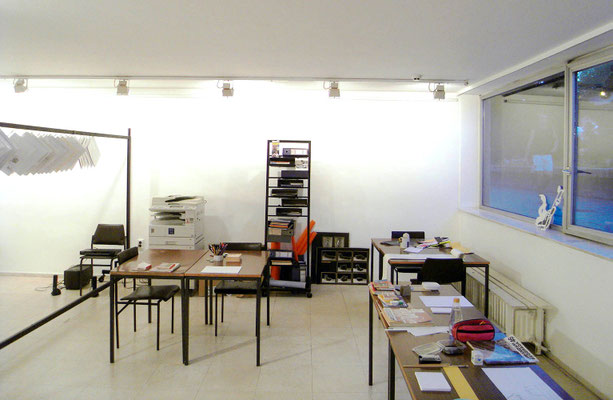
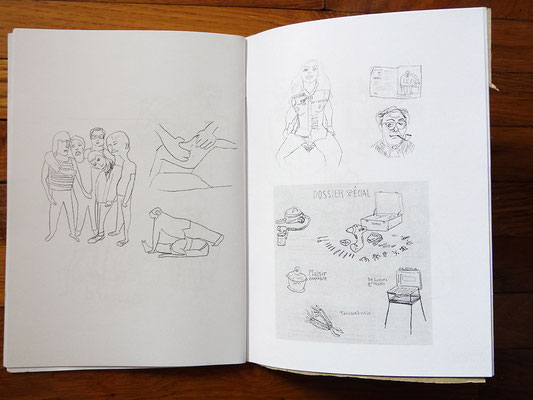
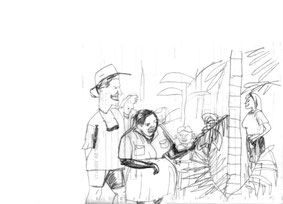
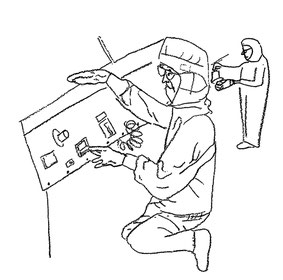
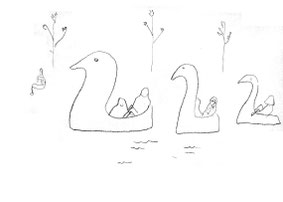
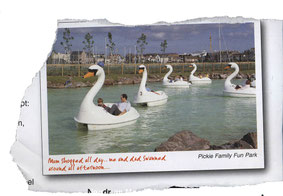
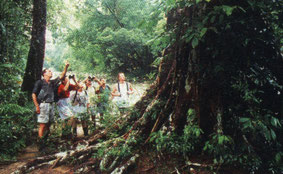
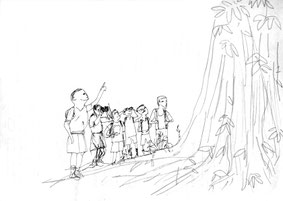
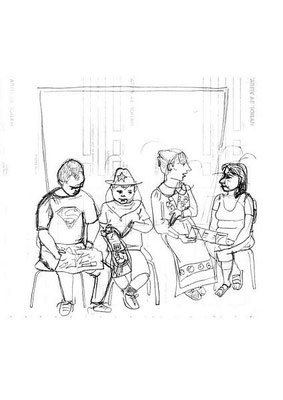
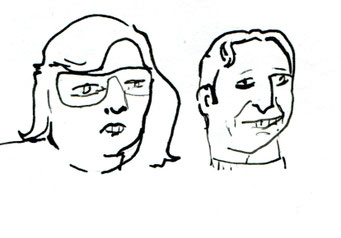
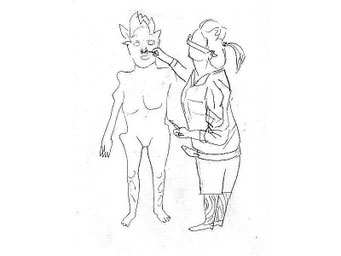
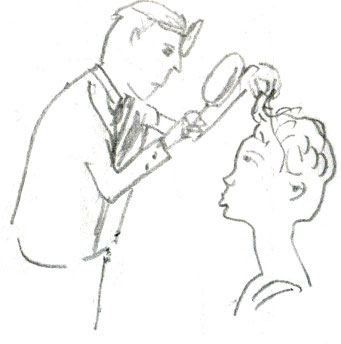
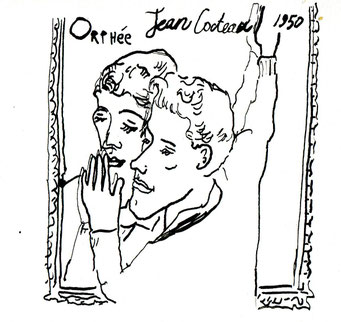
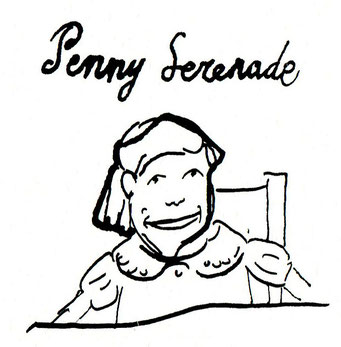
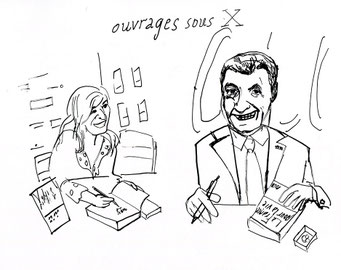
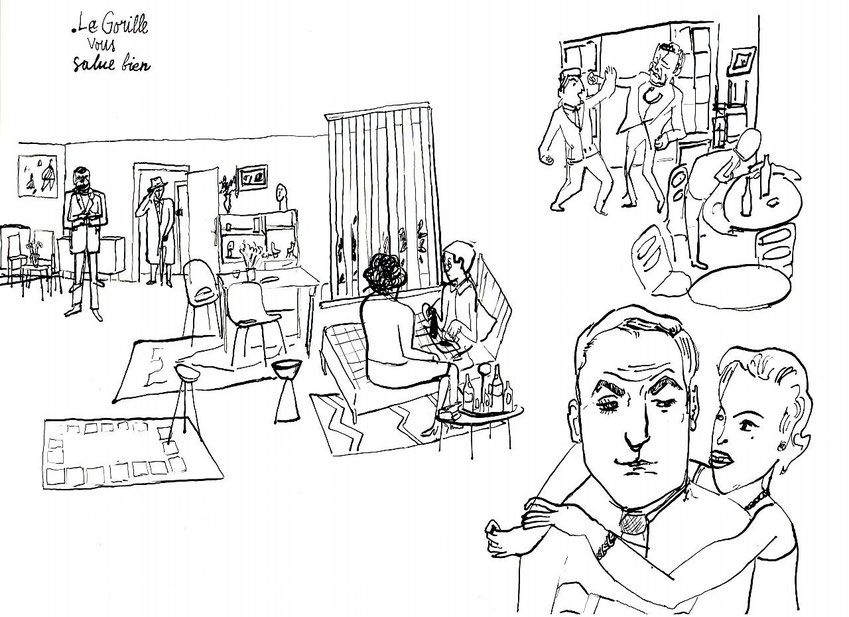
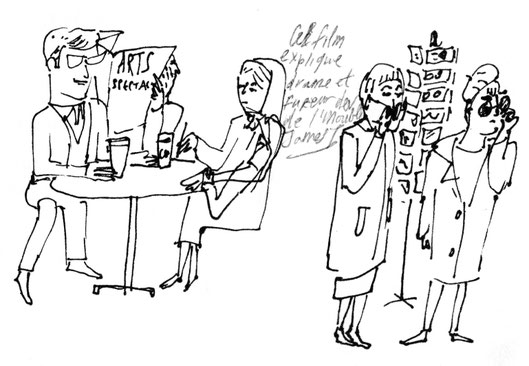
processes that remain invisible in everyday life. At the heart of the installation is a workstation for "image writing." The artist translates mass media and donated photographs
into simple, linear drawings. The focus is not on technical virtuosity, but on the handwriting and the gaze of the draughtsman as an act of decision and judgment. Here, drawing
functions as a medium positioned between history painting and the contemporary document, allowing us to survey the condition of our historical consciousness in relation to the
image-economies of present-day mass media.
The gallery is transformed into a fictional 1950s agency—a symbol of post-war capitalism—structured through three functional zones: The Interactive Bureau: A space of exchange where visitors donate images and actively participate in the
deconstruction and creation of new meanings; The Administrative
Office: A site for correspondence, scanning, and archiving, where the artistic process assumes a rigorous bureaucratic form; The Accumulator (Archive): A room saturated with thousands of drawings on cheap paper (envelopes,
newsprint), visually oscillating between archival isolation and a laboratory for researching collective memory.
Through the interpretation of collected material, Translation Services proves that the visual system is
not a fixed or inevitable reality, but an open space where the value of an image is defined by its use rather than its origin. This methodology renders Šejma Fere’s agenda
socially charged, challenging the hierarchies of visual language and the politics of representation. By employing drawing as witnessing and manual labor as a means of resistance,
the artist balances between the abstract and the concrete, offering a critical insight into the contradictions of contemporary society and confirming that reality is subject to
constant reshaping.